
Many crypto project founders believe influencer outreach is simply sending cold messages to popular crypto Twitter accounts or YouTube channels, hoping for a shoutout. This misconception leads to wasted budgets, damaged reputations, and missed opportunities in Web3 marketing. Real influencer outreach in 2026 requires strategic relationship building, authentic engagement, and deep understanding of crypto communities. Trust and transparency matter more than ever, especially after years of undisclosed promotions and scam projects that eroded community confidence. This guide reveals what influencer outreach truly means for crypto marketing and how to leverage it effectively to build credibility, expand reach, and drive measurable results for your Web3 project.
Table of Contents
- Understanding Influencer Outreach In Crypto Marketing
- The Role Of Micro And Niche Influencers In Web3 Communities
- Setting Clear Goals And Measuring Success In Influencer Outreach
- Best Practices And Strategies For Effective Crypto Influencer Outreach
- Enhance Your Crypto Influencer Outreach With CryptoClicks
Key takeaways
| Point | Details |
|---|---|
| Strategic relationship building | Influencer outreach creates authentic partnerships with trusted crypto voices to boost project visibility and community trust. |
| Micro influencer advantage | Niche crypto influencers deliver higher engagement and credibility within specialized DeFi, NFT, and GameFi communities. |
| Goal-driven campaigns | Clear objectives enable precise measurement, efficient budget allocation, and protection against wasted marketing spend. |
| Transparency challenges | Fraud and undisclosed promotions remain major obstacles requiring blockchain verification and rigorous influencer vetting. |
| Data-driven approaches | Advanced analytics and multi-platform strategies separate successful 2026 campaigns from outdated tactics. |
Understanding influencer outreach in crypto marketing
Influencer outreach in crypto marketing represents personalized strategic communication designed to engage crypto influencers for authentic project promotion. Unlike generic social media advertising, this approach focuses on building genuine relationships with voices your target audience already trusts. The crypto space demands this authenticity because communities remain skeptical after witnessing countless rug pulls, pump-and-dump schemes, and misleading celebrity endorsements.
Crypto-specific outreach differs fundamentally from traditional influencer marketing in several critical ways. You must navigate complex regulatory landscapes where disclosure requirements vary by jurisdiction. Community-driven governance models mean influencers often hold real decision-making power within DAOs and protocol communities. Token economics create unique incentive structures that traditional marketing frameworks cannot address. The pseudonymous nature of many crypto influencers requires different verification and trust-building approaches than mainstream social media marketing.
Influencer marketing in 2026 requires trust, authenticity, multi-platform distribution, and advanced data-driven decision-making. Your outreach strategy must span Twitter, Discord, Telegram, YouTube, and emerging Web3 social platforms where crypto communities actively engage. Single-channel approaches no longer deliver competitive results. You need coordinated messaging that respects each platform’s unique culture and communication norms.
Crypto influencers fall into distinct categories that require tailored outreach approaches:
- Micro influencers with 5,000 to 50,000 highly engaged followers in specific niches
- Subject matter experts specializing in DeFi protocols, smart contract security, or tokenomics
- Community builders who manage active Discord servers or Telegram groups
- Content creators producing educational YouTube videos or Twitter threads
- Protocol contributors with technical credibility and developer followings
Understanding the power of crypto marketing means recognizing that influence in Web3 stems from demonstrated knowledge, consistent community engagement, and transparent track records. Follower counts matter less than genuine expertise and trust within specific crypto sectors.
The role of micro and niche influencers in Web3 communities
Micro influencers typically command audiences between 5,000 and 50,000 followers, while niche influencers focus on highly specialized crypto sectors regardless of follower count. These voices have built strong reputations through consistent, valuable content that addresses specific community needs. Their audiences actively seek their opinions before making investment decisions or trying new protocols.
These influencers maintain strong credibility within DeFi, NFTs, GameFi, DePIN, AI crypto, and meme coin communities. A DeFi protocol analyst with 15,000 followers who regularly publishes detailed smart contract audits carries more weight than a generic crypto influencer with 500,000 followers posting surface-level market commentary. Their targeted expertise creates trust that translates directly into project adoption and community growth.

Pro Tip: Evaluate influencers based on comment quality and discussion depth rather than like counts. Look for audiences asking thoughtful questions and sharing detailed feedback, which signals genuine engagement over bot activity.
Micro and niche influencers deliver several strategic advantages for crypto project outreach:
- Higher engagement rates averaging 3% to 8% compared to 1% to 2% for macro influencers
- Cost-effective partnerships that fit startup budgets while delivering measurable results
- Precise audience targeting within specific crypto sub-sectors and use cases
- Authentic content that feels like peer recommendations rather than paid advertisements
- Long-term relationship potential as projects and influencers grow together
The BasedRate case study demonstrates how targeted micro-influencer campaigns drive real protocol adoption and community building. Similarly, the Ordinal Pepe campaign showcases niche influencer effectiveness in the NFT space, where specialized knowledge and community trust matter more than broad reach.
GameFi projects benefit enormously from gaming-focused crypto influencers who understand play-to-earn mechanics and can authentically review gameplay. DePIN projects need influencers who grasp physical infrastructure networks and can explain complex tokenomics to technical audiences. Meme coin launches require influencers embedded in crypto Twitter culture who understand viral mechanics and community humor.
Setting clear goals and measuring success in influencer outreach
Defining precise outreach objectives aligned to measurable KPIs separates successful campaigns from budget-draining experiments. Clear goals help you design messaging, measure results, and prevent wasted marketing budgets. Without specific targets, you cannot evaluate influencer performance, optimize spending, or justify continued investment in outreach activities.
Common outreach objectives for crypto marketing campaigns include:
- Increasing brand awareness and project visibility across target crypto communities
- Driving qualified traffic to your website, documentation, or dApp interface
- Expanding reach into new geographic markets or demographic segments
- Boosting token sales, NFT mints, or protocol total value locked
- Building trust among skeptical users through credible third-party validation
- Generating specific conversions such as wallet connections, app downloads, or whitelist signups
- Securing long-term community engagement and active participation in governance
Mapping goals to relevant metrics enables accurate performance tracking and campaign optimization. This table shows how different objectives connect to measurable outcomes:
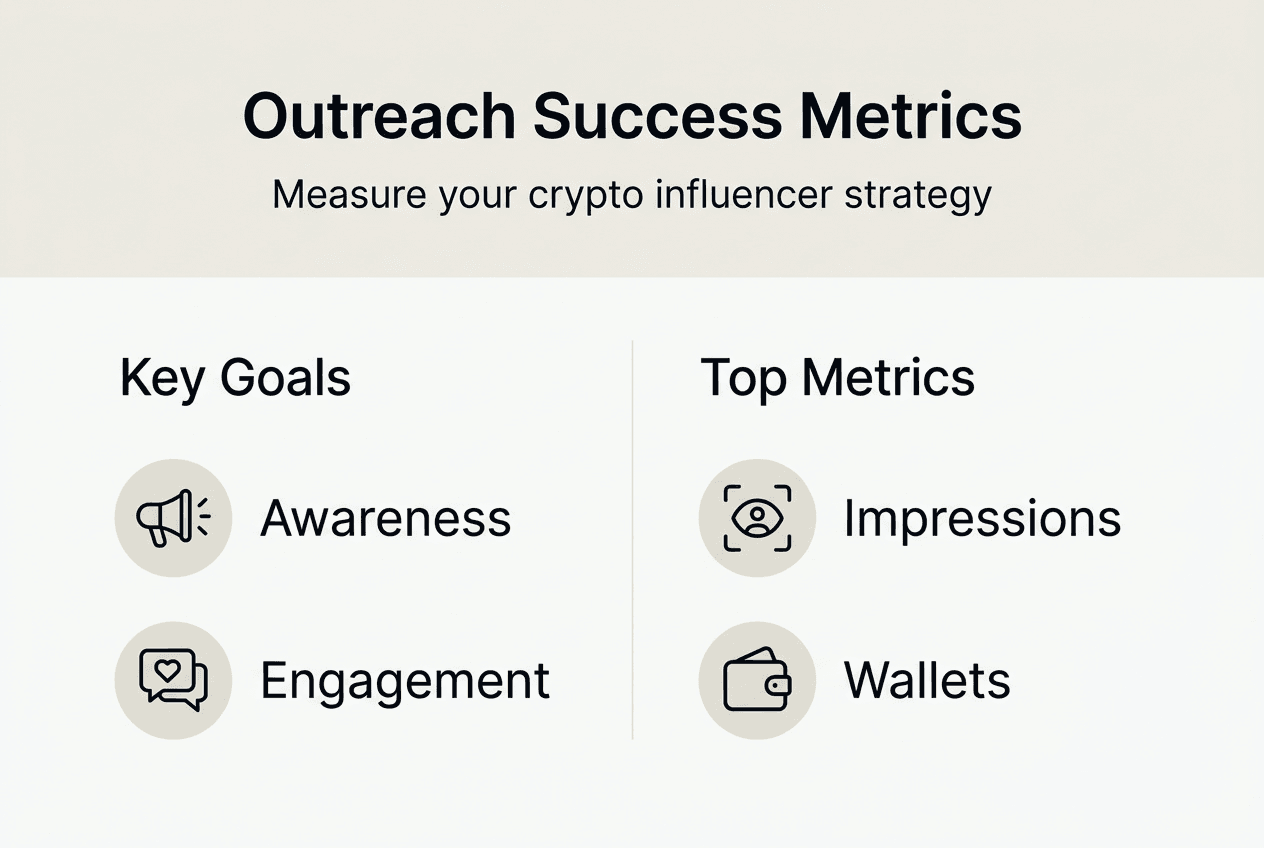
| Campaign Goal | Key Metrics | Measurement Tools |
| — | — |
| Brand awareness | Impressions, reach, mentions, sentiment analysis | Social listening platforms, Twitter analytics, Discord activity |
| Website traffic | Click-through rates, unique visitors, time on site | Google Analytics, UTM parameters, referral tracking |
| Token sales | Conversion rates, wallet connections, transaction volume | On-chain analytics, DEX data, smart contract events |
| Community growth | New Discord/Telegram members, active participants, retention rates | Community management tools, engagement dashboards |
| Trust building | Positive sentiment, reduced FUD, increased organic mentions | Social sentiment tools, community surveys, reputation monitoring |
At least 15% of advertisers’ spending on influencer marketing is lost to fraud, costing them $1.3 billion annually. This staggering waste stems from fake followers, bot engagement, and undisclosed paid promotions that deceive both brands and audiences. Crypto projects face even higher fraud risks due to the pseudonymous nature of Web3 and the prevalence of pump-and-dump schemes.
Pro Tip: Use blockchain and on-chain data to verify influencer impact by tracking wallet addresses, transaction patterns, and protocol interactions attributed to specific campaigns. This transparency helps detect fake engagement and validates real community growth.
The Dynamite Blockchain insights demonstrate how infrastructure projects can measure technical adoption and developer engagement beyond surface-level metrics. Focus on meaningful actions like GitHub contributions, testnet participation, and technical documentation views rather than vanity metrics.
Best practices and strategies for effective crypto influencer outreach
Successful crypto influencer outreach in 2026 requires systematic approaches that prioritize authenticity, transparency, and long-term relationship building. Crypto audiences rarely trust traditional advertising because the industry has seen its share of scams, rug pulls, and misleading promotions. Your outreach must overcome this skepticism through genuine partnerships and honest communication.
Implement these best practices to build trustworthy and high-ROI influencer campaigns:
- Conduct thorough influencer vetting including past partnerships, audience quality analysis, and reputation research
- Prioritize transparent communication about partnership terms, compensation structure, and disclosure requirements
- Develop personalized outreach messages that reference specific content and demonstrate genuine interest
- Use multi-channel approaches coordinating Twitter, YouTube, Discord, and Telegram for maximum reach
- Create clear collaboration guidelines covering content approval, posting schedules, and performance expectations
- Build long-term relationships rather than one-off promotions to establish sustained community presence
- Monitor and respond to community feedback to address concerns and maintain authentic engagement
In 2026, influencers play a more significant role because users prefer real-time content, personal insights, and project reviews from voices they trust rather than corporate-style messaging. Your outreach strategy must enable influencers to create authentic content in their own voice while maintaining accurate project information and regulatory compliance.
Pro Tip: Prioritize influencer authenticity and real engagement over superficial metrics like follower counts or view numbers. A smaller, highly engaged audience delivers better conversion rates and lasting community relationships than large but passive followings.
This comparison table highlights the difference between effective and ineffective outreach tactics:
| Effective Approach | Ineffective Approach |
|---|---|
| Personalized messages referencing specific content | Generic copy-paste templates sent to hundreds |
| Transparent disclosure of paid partnerships | Hidden sponsorships without proper disclaimers |
| Long-term collaboration agreements | One-off promotional posts without follow-up |
| Influencer creative freedom within guidelines | Rigid scripts that sound inauthentic |
| Performance-based compensation models | Flat fees regardless of results |
| Multi-platform coordinated campaigns | Single-channel isolated promotions |
| Ongoing relationship nurturing | Transactional interactions only |
Explore the crypto marketing blog for detailed case studies and tactical guides on implementing these strategies. Learn from real campaigns that achieved measurable results through authentic influencer partnerships. Understanding how to choose crypto marketing agencies helps you evaluate whether to build in-house capabilities or partner with specialists who bring established influencer networks and proven processes.
Enhance your crypto influencer outreach with CryptoClicks
Implementing effective influencer outreach requires specialized expertise, established relationships, and proven processes that most crypto projects lack in-house. CryptoClicks operates as a leading crypto marketing agency specializing in authentic influencer partnerships that drive measurable project growth. Our team understands the nuances of Web3 communities and has built trusted relationships with micro and niche influencers across DeFi, NFTs, GameFi, and emerging crypto sectors.

Our BasedRate case study showcases how strategic influencer outreach increased protocol visibility and community engagement within competitive DeFi markets. The Ordinal Pepe campaign demonstrates our ability to identify and activate niche influencers who drive real NFT adoption and collector engagement. We combine data-driven influencer selection with transparent campaign management to maximize your marketing ROI while building lasting community trust. Partner with experts who understand crypto marketing’s unique challenges and deliver results that matter for your project’s success.
FAQ
What is influencer outreach in crypto marketing?
Influencer outreach in crypto marketing is the strategic process of identifying, connecting with, and collaborating with trusted crypto influencers to promote blockchain projects authentically. This approach focuses on building genuine relationships that enhance community trust and project credibility. Unlike traditional advertising, it leverages the established reputation and engaged audiences of crypto voices to reach skeptical Web3 communities effectively.
How do micro influencers impact crypto project visibility?
Micro influencers deliver high credibility within niche crypto sectors, driving authentic engagement and strong community trust that often yields better ROI than partnerships with larger influencers. Their focused audiences enable precise targeting of specific crypto sub-communities like DeFi protocols, NFT collectors, or GameFi players. These influencers maintain closer relationships with followers, resulting in higher conversion rates and more meaningful project adoption.
What are common mistakes to avoid in crypto influencer outreach?
Common mistakes include ignoring transparency requirements, prioritizing follower counts over genuine engagement metrics, and failing to set measurable campaign goals. These errors lead to wasted budgets, damaged project reputations, and regulatory compliance issues. Avoid undisclosed paid collaborations that violate advertising standards and erode community trust. Always vet influencers thoroughly for past controversies, fake followers, and alignment with your project values before initiating partnerships.
How can blockchain data improve influencer outreach measurement?
Using blockchain data helps marketers verify genuine engagement by tracking on-chain activity like wallet connections, token transactions, and smart contract interactions attributed to specific campaigns. This transparency combats influencer fraud by validating real conversions rather than relying on easily manipulated social media metrics. On-chain analytics enable more accurate ROI measurement and better campaign optimization based on actual user behavior rather than vanity metrics.


Recent Comments